
Not all fires are the same—and neither are fire extinguishers. Using the wrong type of extinguisher can make a fire worse instead of controlling it. Understanding the different types of fire extinguishers and their uses is essential for every home, office, and industrial space.
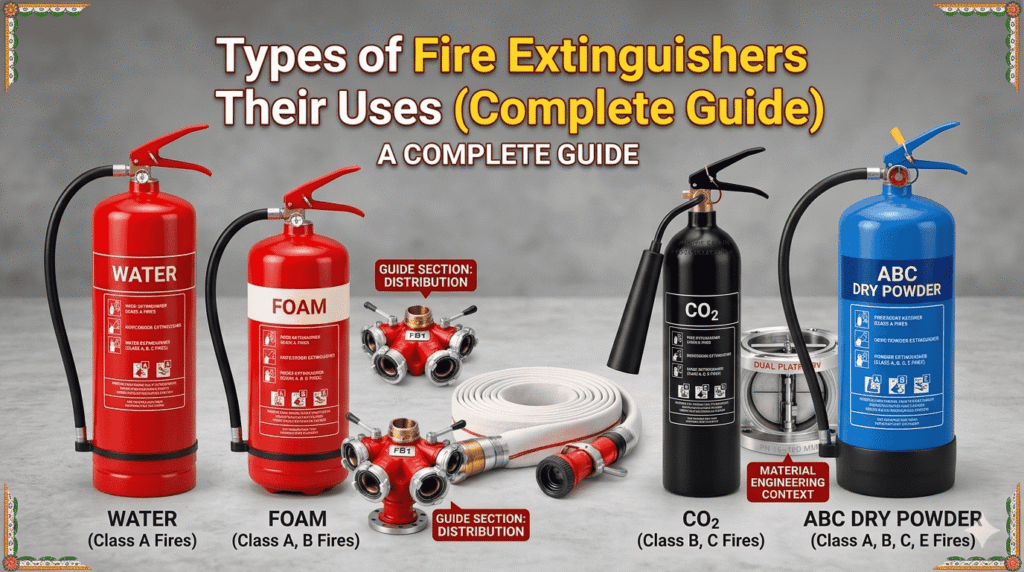
Why Choosing the Right Fire Extinguisher Matters
Each fire is caused by different materials such as wood, electrical equipment, or flammable liquids. A specific type of extinguisher is designed to handle each fire category safely and effectively.
Types of Fire Extinguishers
1. ABC Dry Powder Extinguisher
This is the most commonly used extinguisher.
Suitable for:
- Wood, paper, cloth (Class A)
- Flammable liquids (Class B)
- Electrical fires (Class C)
Best for offices, homes, and general-purpose use.
2.CO₂ (Carbon Dioxide) Extinguisher
CO₂ extinguishers are ideal for electrical fires.
Suitable for:
- Electrical equipment
- Server rooms
- Offices
Leaves no residue, making it perfect for sensitive equipment.
3. Foam Fire Extinguisher
Foam extinguishers are used for liquid fires.
Suitable for:
- Petrol, diesel, oil fires
- Industrial areas
Not suitable for electrical fires.
4. Water Fire Extinguisher
Water extinguishers are the simplest type.
Suitable for:
- Wood, paper, and fabric fires
Never use on electrical or oil fires.
5. Clean Agent Extinguisher
Modern and advanced fire extinguisher.
Suitable for:
- Electrical equipment
- Data centers
- High-value assets
Leaves no residue and is safe for electronics.
Common Mistakes to Avoid
- Using water on electrical fires
- Using the wrong extinguisher type
- Not checking expiry or pressure
- Lack of training in usage
How to Use a Fire Extinguisher (PASS Method)
- P – Pull the safety pin
- A – Aim at the base of the fire
- S – Squeeze the handle
- S – Sweep side to side
Maintenance Is Important
Fire extinguishers must be checked regularly to ensure they are in working condition. Pressure levels, expiry dates, and physical condition should be inspected periodically.